

Clentel-Real Estate App
Through a wide variety of mobile applications, I’ve developed a unique visual system and strategy that can be applied across the spectrum of available applications.
Scope
Complete user flow for two user roles, more than 200 screens; supporting documentation
Duration
2 Months
Result
Product in Front-end implementation and design in UI stage
Overview
I had already been working with this client on another UX design project, and the CIO approached me, asking if I could assist with the product discovery for a new solution they intended to launch quickly. Soon our collaboration turned into a full user experience design for the product.
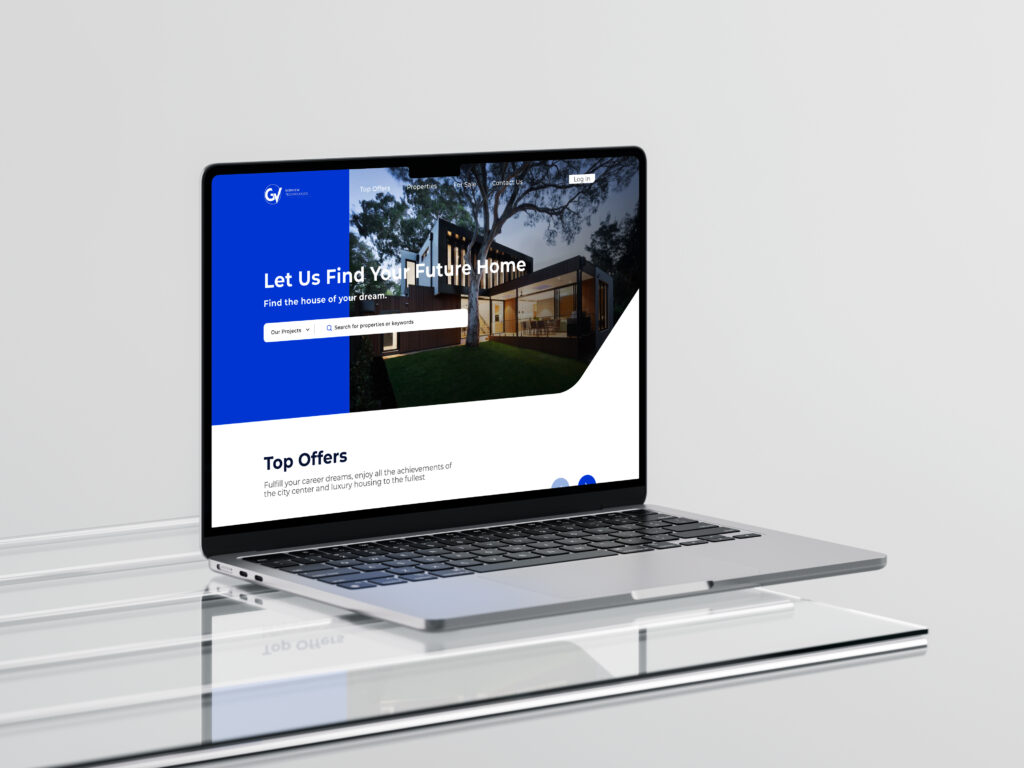
The solution was in the real estate domain, for brokerage and real estate agencies all over the world. It contained three cornerstone blocks of the system: management of property listings, management of leads and clients, and website builder for quick and easy creation of personalized webpages. It was part of a larger product environment, which shared the same data sources. A solution of this kind is unique, though there are indirect competitors that cover certain features.
There are always some stocks, which illusively scale lofty heights in a given time period. However, the good show doesn’t last for these overblown toxic stocks as their current price is not justified by their fundamental strength.
Benefits
- Reused design system elements from another product we designed for this client
- Collaborative stakeholders (business, internal BAs and developers)
- Involved Business Analyst during full design cycle
- Team had decades of experience in real estate technology
- Collaboration with development team to validate tech feasibility of design decisions
Challenges
- Data dependencies with other products of the ecosystem
- Legacy system without comprehensive documentation
- Tight deadlines
- WCAG compliance requirements
- Multilingual requirements
Simple but powerful
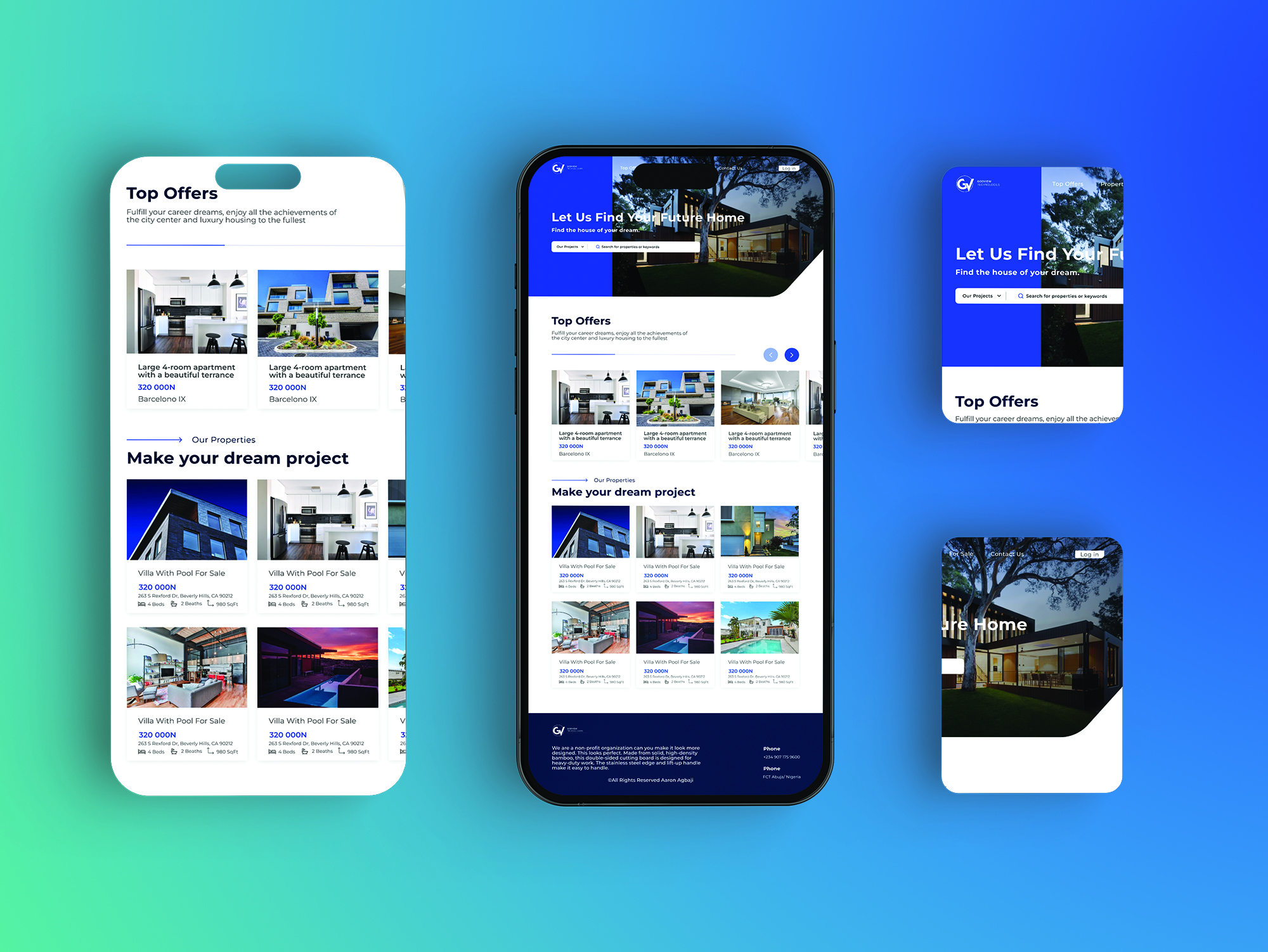
When designing this SaaS solution I aimed to make it functional and powerful, but keep user experience seamless, simple and straight forward.
Sing up
Real-estate market players are represented by different types of entities: from huge organisations to smaller agencies, teams of agents or individual agents. Org structures are usually very complicated with multiple levels of offices and sub-offices. And each entity can join the platform as part of bigger organisation or independently. This is what I had to consider while designing, as a rule simple, flow of the account registration. Flow was adjusted for different types of accounts and impacted by validation if account is a part of existing organisation.
Builder “Advanced mode”
Website builder was one of the core features of the product which allowed creating personalised pages to post property listings but also serve as a gateway to collect leads for CRM platform. There are many website builders on the market, so I conducted my research to study the best patterns used in this domain. However, the builder that I designed possessed unique level of control by the administrator
company’s network. As a rule companies have defined branding requirements, which should be followed by all agents belonging to the network. This is why the platform allowed creating company-wide templates for different organisation levels, manage customisable components and force down standard branding requirements to all websites in the chain.
Property listings tracking
A user’s property listings inventory feeds from many sources and is displayed on multiple websites. It is important for a real estate agent to track their performance across these different venues at glance.
I figured out how to keep the balance and display listing information completeness level, and performance information on a listing card while making sure it did not become over-cluttered.
Project discovery phase
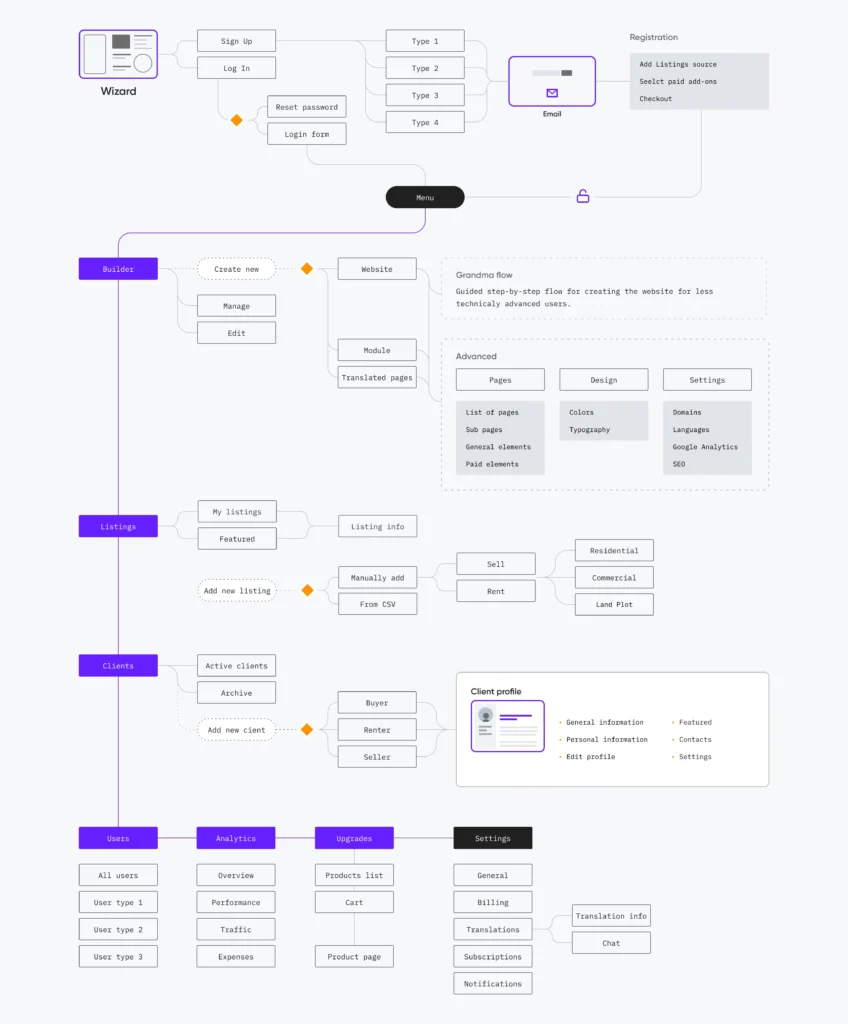
The discovery stage of the project began by exploring the functionality of the existing legacy system, and business requirements about the new capabilities of the product. Based on these discoveries, I defined the scope in the form of information architecture, clarified types of users with their accesses, and produced user flows for main scenarios.