


AI data management tool: transforming bookstore operations.
Don’t waste time and money building something users don’t need. Let me validate, your idea and define a clear strategy backed by real user insight,so you know exactly what works before you start.
Scope
UX/UI design, AI-assisted workflows, automated visualization
Duration
6 Weeks
About the design concept
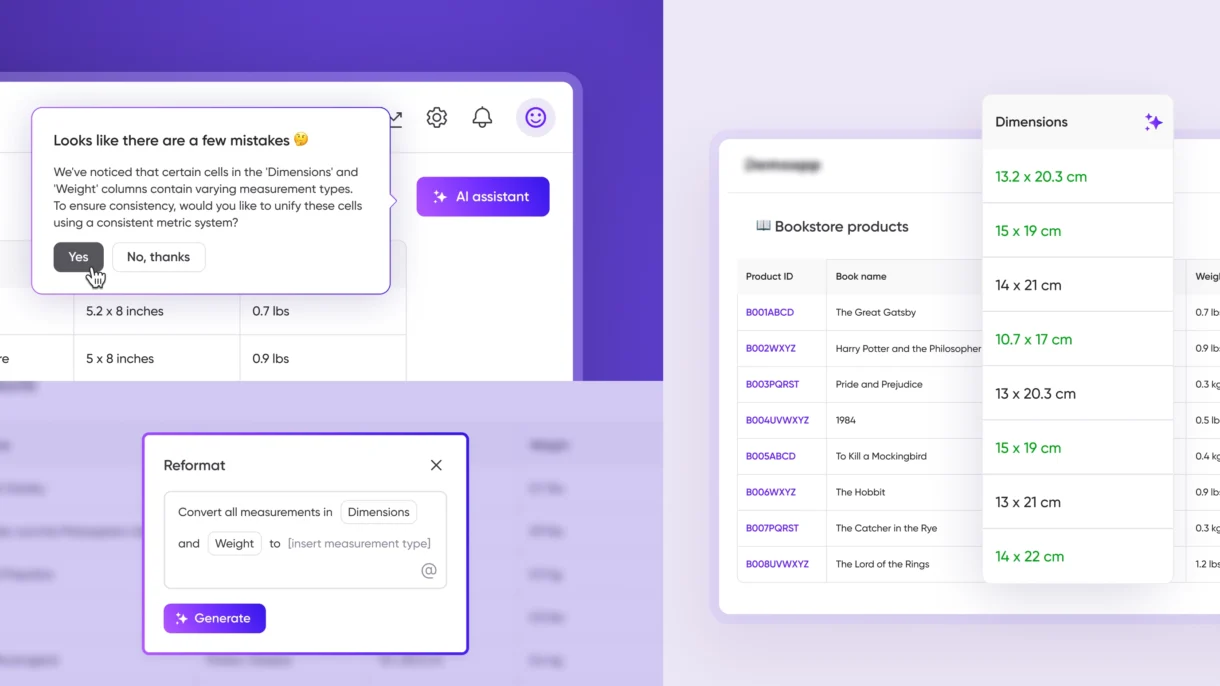
Running an online bookstore means dealing with data everywhere: inventory records, product descriptions, sales dashboards, and customer details. But keeping this data consistent takes countless hours of manual work. CRMs and CMS platforms demand endless input, and dashboards often fall short of delivering real insights.
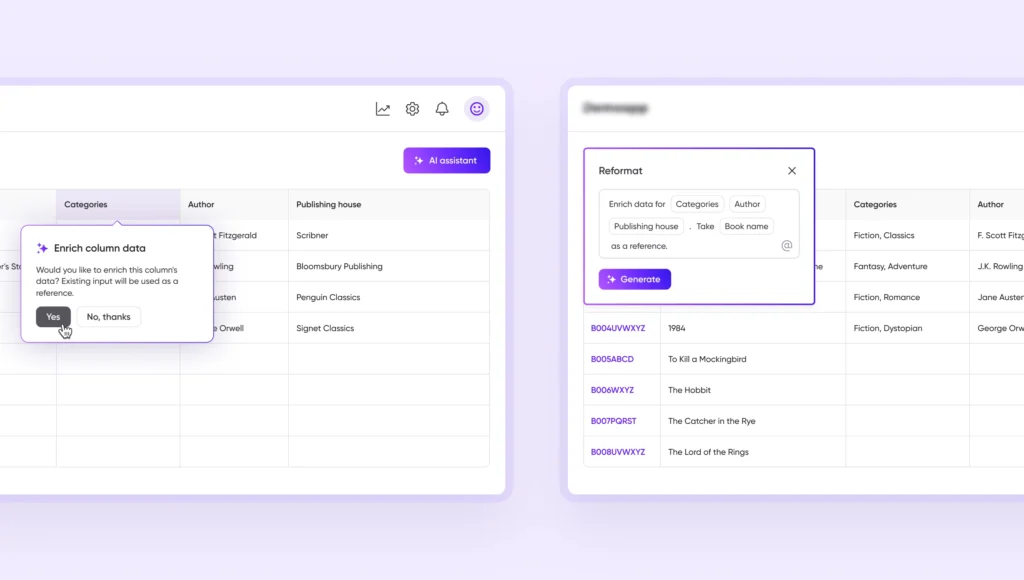
The goal was to design an AI data management tool for bookstore data: a system that could handle repetitive tasks like data entry and even generate descriptions and dashboards, making complex analytics accessible to non-technical staff.
There are always some stocks, which illusively scale lofty heights in a given time period. However, the good show doesn’t last for these overblown toxic stocks as their current price is not justified by their fundamental strength.
Toxic companies are usually characterized by huge debt loads and are vulnerable to external shocks. Accurately identifying such bloated stocks and getting rid of them at the right time can protect your portfolio.
Description generation
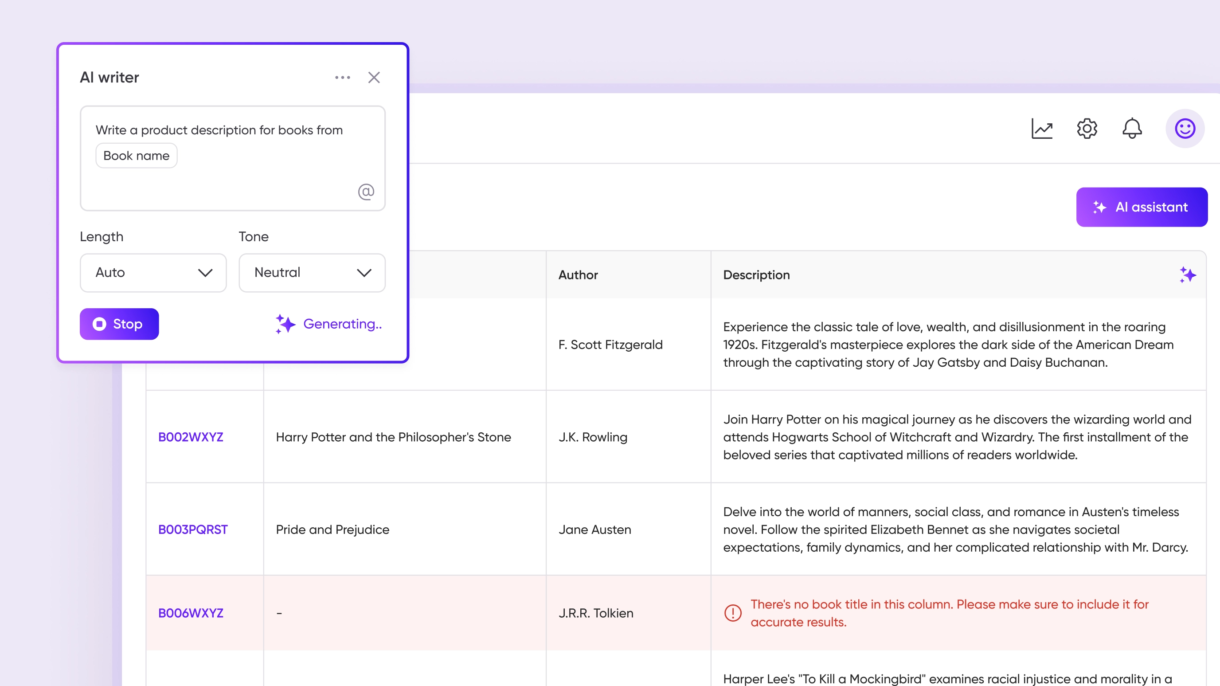
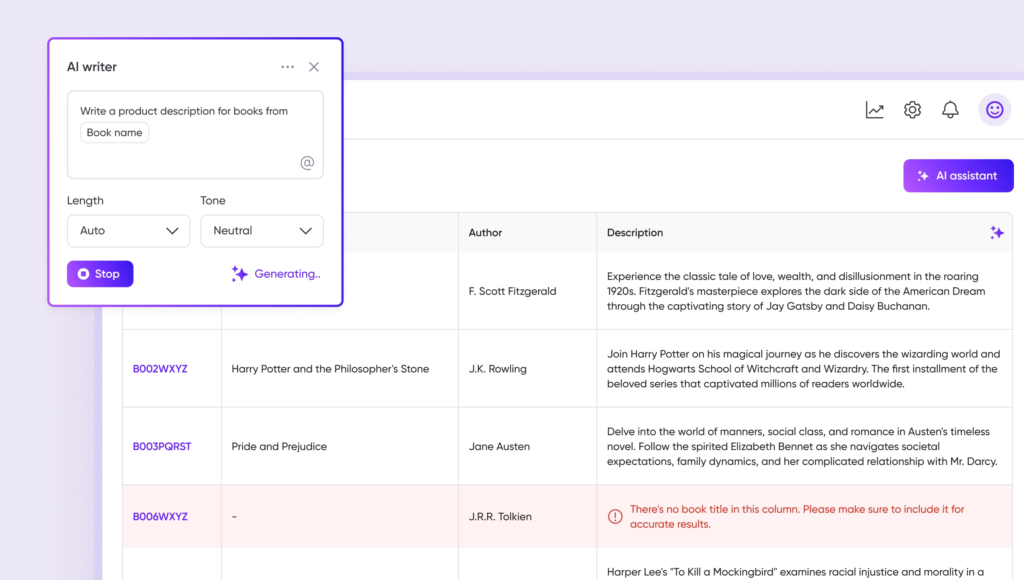
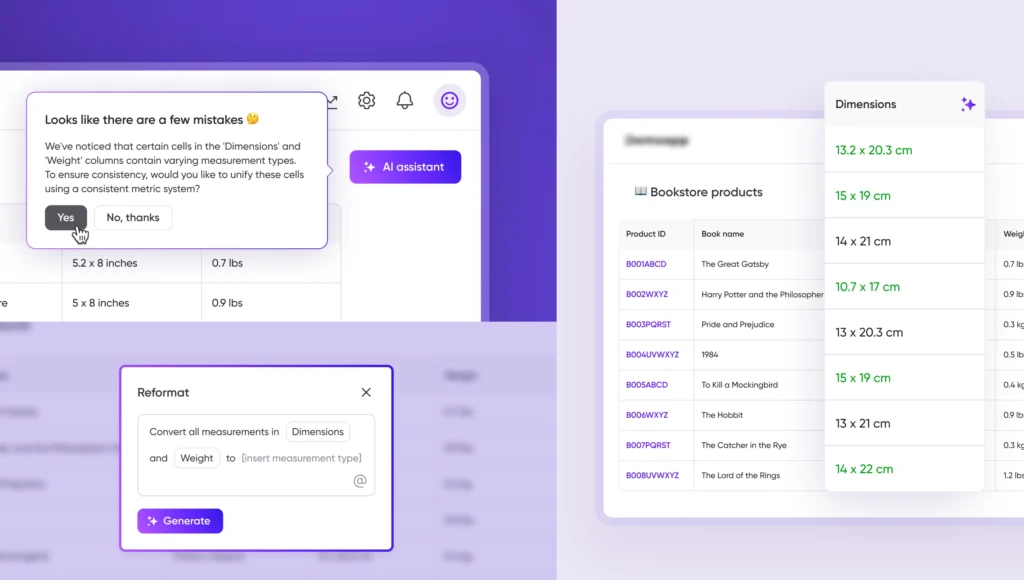
Writing product descriptions for hundreds of books is time-consuming and inconsistent. Tone varies, details get missed, and external tools are often needed. With conversational AI, users can now generate descriptions inside the system, without relying on external writing tools.
error prompts: if a key field (like book title) is missing, the system highlights it before generating.
inline AI writing: within the description column, users can select “Write for me” or create based on an example;
tone & length control: users can adjust messaging style to fit categories (e.g., professional, curious, emotional);
AI-assisted calculations
Working with complex formulas often excluded non-technical staff and left room for human error.
My solution: natural language calculations powered by AI. Instead of memorizing formulas, users simply describe what they need in plain words (e.g., “Calculate product performance index”), and the system generates the correct formula instantly:
inline integration: results are inserted into the relevant table column, so users can immediately see the output in context.
formula preview: the AI displays the generated formula and an explanation of how it works;
AI-driven dashboards
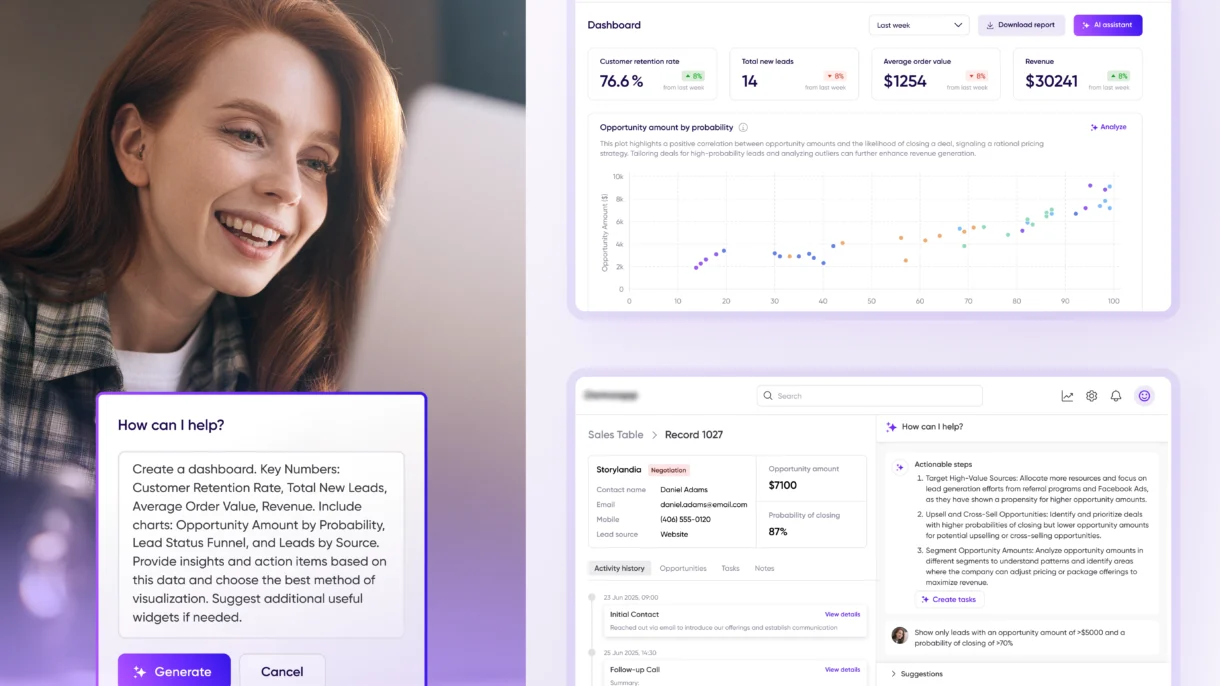
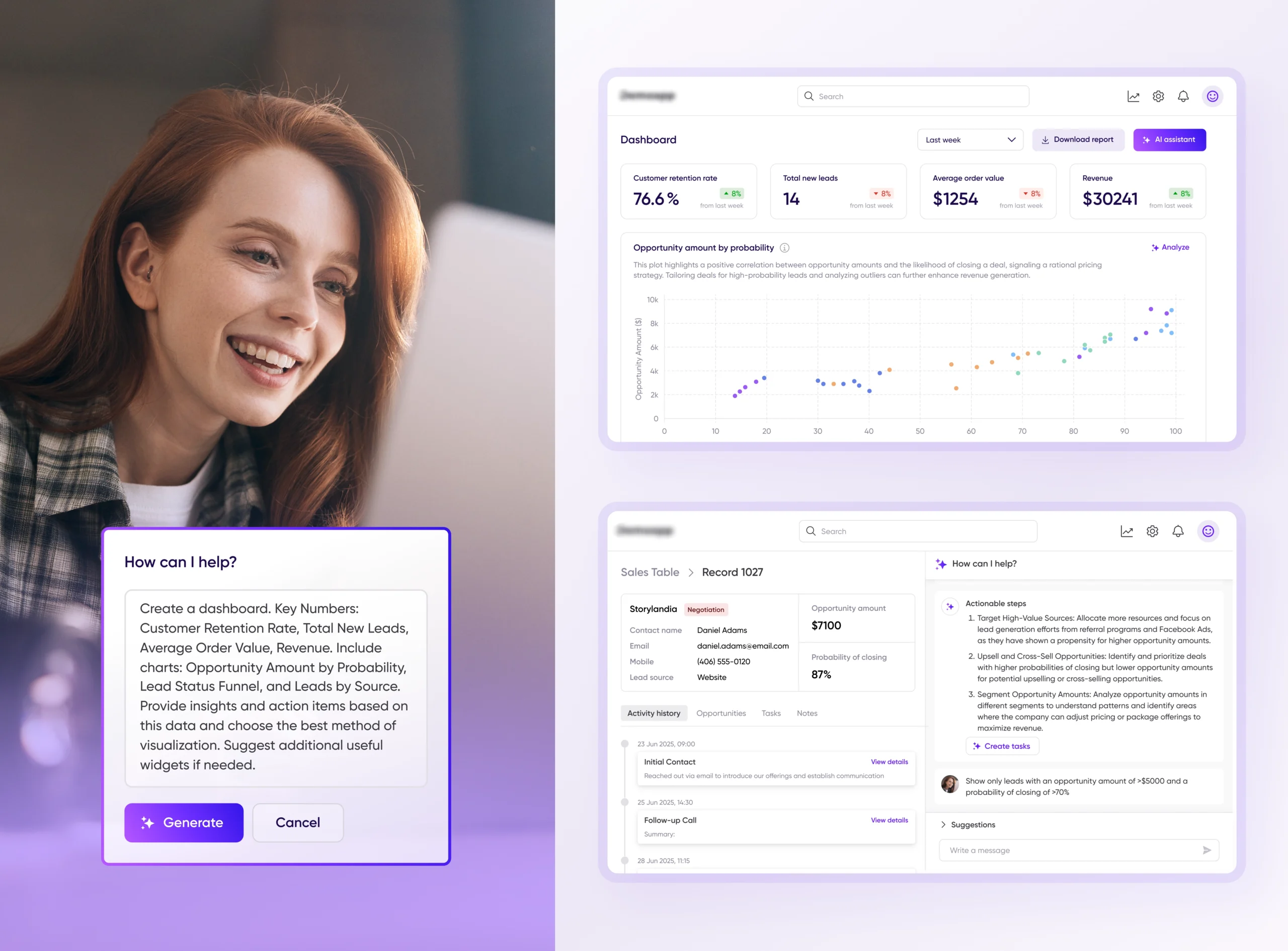
Dashboards are often either too complex for non-technical users or too shallow to provide real value. The challenge was to make visualization both conversational and actionable. This AI-driven dashboard builder turns plain requests into clear visualizations and explanations:
guided exploration: the assistant suggests follow-ups and generates new views.
natural prompts: users type instructions like “Create a dashboard with revenue, retention rate, and leads by source;”
smart layout generation: the system selects the most suitable chart types and assembles widgets automatically;
inline analysis: each chart comes with a short AI-generated explanation highlighting trends and correlations;